My Grandfather’s Altar
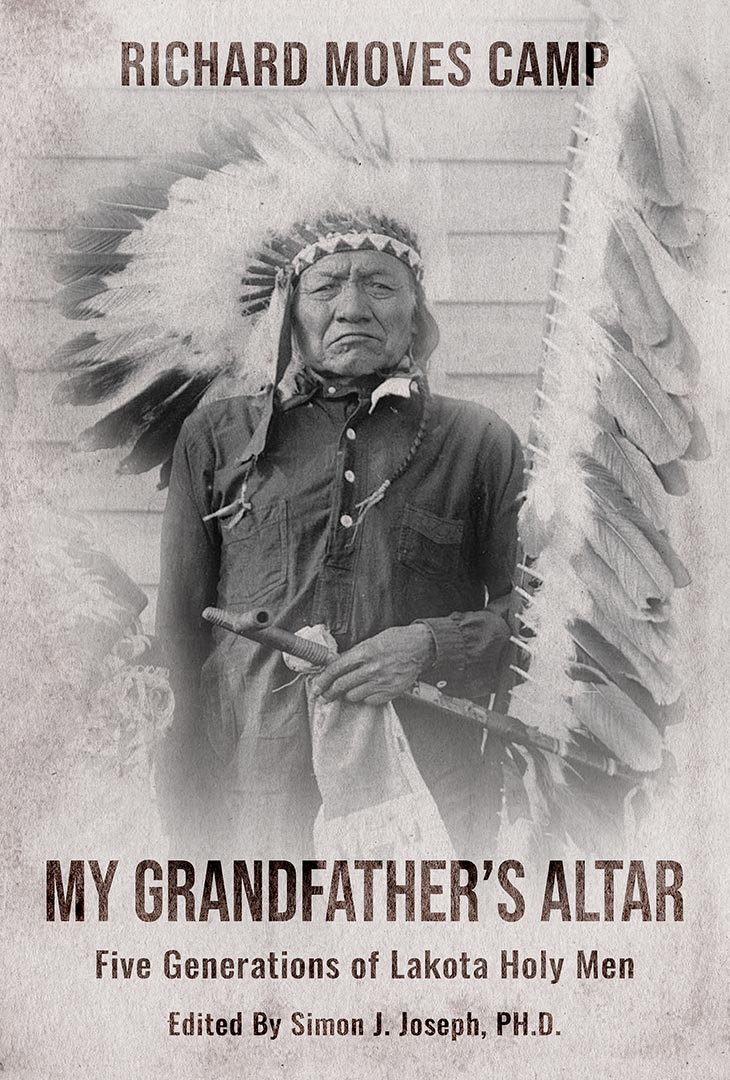
My Grandfather’s Altar
(University of Nebraska Press, 2024)
My Grandfather’s Altar is an oral history memoir by Lakota spiritual leader Richard Moves Camp. Richard is the great, great grandson of Wóptuȟ’a (“Chips”), the wičháša wakȟáŋ (“holy man”) remembered for providing his friend, Crazy Horse, with war medicines of power and protection. Among the Lakota, the descendants of Wóptuȟ’a are remembered for their roles in preserving, protecting, and perpetuating Lakota ceremonial traditions for over five generations, particularly during the official prohibition period (1883-1934), when the United States Indian Religious Crimes Code outlawed Indian religious ceremonies with the threat of imprisonment.
I first met Richard in the summer of 2017. I had initially contacted him via email about a year earlier about an article I was writing on the history of the Yuwípi ceremony for the Journal of the American Academy of Religion. We met at his house in Wanblee, our conversation ranging over a number of topics. Richard thought that it would be good to tell the story of his grandfathers, so in February 2020, we met again in Los Angeles.
My Grandfather’s Altar represents a rare opportunity to hear the sacred family history of five generations of Lakota religious tradition.
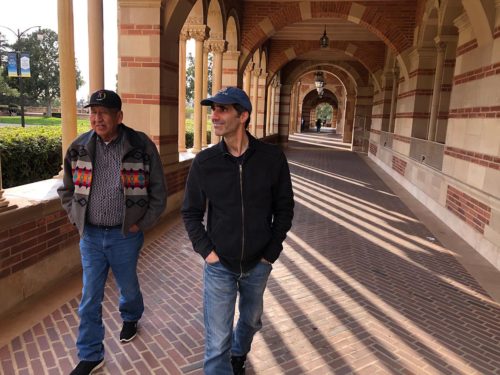
Simon & Richard at UCLA
Reviews
“My Grandfather’s Altar is a moving and richly informative account of Lakota spirituality, as told through the medicine tradition in a single family. This eye-opening memoir is essential reading not just for anyone interested in Native American spiritual traditions, but also for understanding forms of religious consciousness more broadly defined. In more senses than one, the book is a revelation.”
—Devon Mihesuah
Oklahoma Choctaw and Author of Ned Christie; ‘First to Fight’; and Choctaw Crime and Punishment, 1884-1907
“My Grandfather’s Altar provides a return back to the spirituality of Lakota people. In order for healing to occur for the current and future generations of Lakota people, this book is needed for the present time. Older ‘as-told-to’ genres on Lakota cultural and spiritual life are dated. This book provides a contemporary perspective and contributes greatly to the spiritual or religious life of contemporary Lakota and non-Lakota people … Many times, as I read it, I felt it was a very personal conversation and I was being asked to listen … listen … listen; and learn.”
—Delphine Red Shirt
Author of Bead on an Anthill: A Lakota Childhood; George Sword’s Warrior Narratives
“Richard Moves Camp provides a rich, powerful narrative based on his family’s experiences. This book gives us an intimate window into Lakȟóta spirituality and way of life. This is a Lakȟóta story told in a uniquely Lakȟóta way by those who experienced it first-hand. This book is a must read to anyone interested in Lakȟóta past and present.”
—Rani-Henrik Andersson
Author of The Lakota Ghost Dance of 1890
“My Grandfather’s Altar is a moving and richly informative account of Lakota spirituality, as told through the medicine tradition in a single family. This eye-opening memoir is essential reading not just for anyone interested in Native American spiritual traditions, but also for understanding forms of religious consciousness more broadly defined. In more senses than one, the book is a revelation.”
—Philip Jenkins
Author of Dream Catchers: How Mainstream America Discovered Native Spirituality
“A powerful, touching, and fascinating memoir that takes us into a magical, mysterious world known to but a few.”
—Dale C. Allison, Jr.
Princeton Theological Seminary
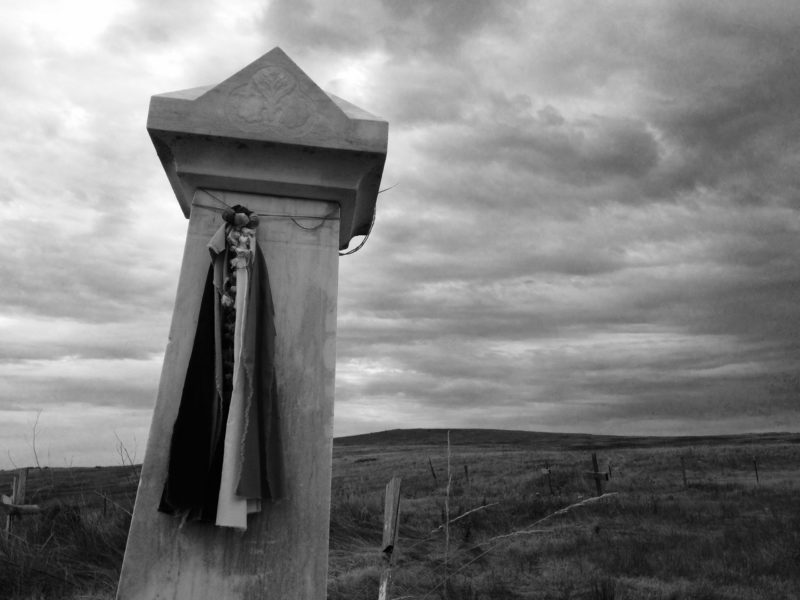
Wóptuȟ’a’s gravesite marker, Hisle cemetery, South Dakota.